
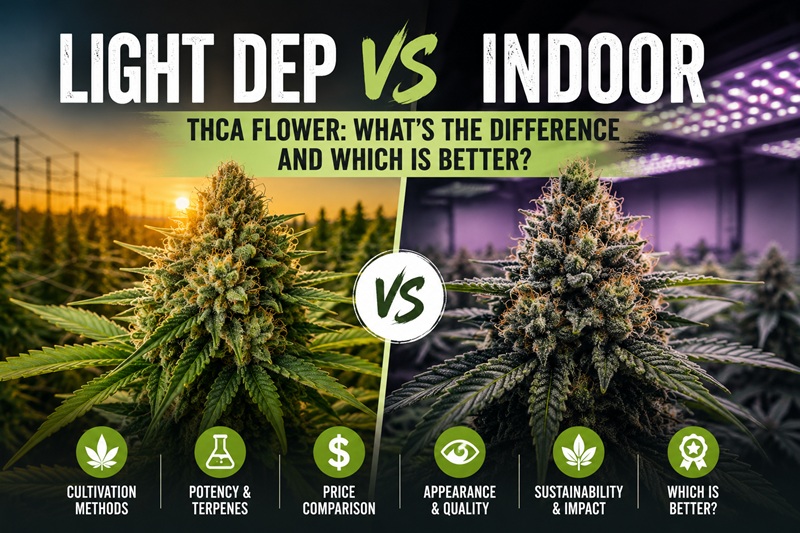
The debate between light dep and indoor THCa has become increasingly popular among consumers as they look for the highest-quality flower available. Some buyers choose premium indoor THCa flower because of its dense buds and impressive bag appeal. In contrast, others prefer light-deprivation cannabis because it offers a balance between quality and affordability.
“Light-dep, indoor, outdoor, and greenhouse-grown” may seem like cultivation labels, but understanding how each cultivation method works can help you make a smarter purchase.
In this article, we will discuss the differences between light dep and indoor THCa flower, explain how they are grown, compare their strengths and weaknesses, and help you decide which option best matches your preferences.
Recommended Products
-
Sale!
Delta-8 Pomegranate Gummies 30mg
or subscribe to save up to 30%
$69.95$59.95 View Product This product has multiple variants. The options may be chosen on the product page -
Sale!
Delta-9 Pomegranate Gummies 20mg
or subscribe to save up to 30%
$69.95$59.95 View Product This product has multiple variants. The options may be chosen on the product page -
Sale!
CBD 25mg+ CBN 25mg+ Melatonin 5mg Pomegranate Sleep Gummies
or subscribe to save up to 30%
$69.95$59.95 View Product This product has multiple variants. The options may be chosen on the product page
What is Light Dep Weed Meaning?
Light dep weed refers to cannabis or hemp flower grown using a cultivation technique called light deprivation. In this process, the amount of light plants receive each day is controlled by covering the greenhouse with blackout tarps or automated light-blocking systems. Cannabis naturally enters its flowering stage when daylight hours become shorter. If you want a deeper primer on what light deprivation cannabis is before comparing methods, our dedicated guide covers the basics.
Light deprivation allows growers to manipulate this cycle and trigger flowering earlier than it would occur outdoors.
Most light dep flower is cultivated in a greenhouse environment. Because of this, many consumers associate it with weed greenhouse production.
The controlled greenhouse setup gives plants access to natural sunlight while still allowing growers to regulate the flowering cycle. As a result, growers can often produce multiple harvests throughout the year rather than waiting for a single outdoor harvest season. If you want to try this yourself, our step-by-step guide on how to grow THCA-rich cannabis with light deprivation walks through the full setup.
When people search for dep weed meaning, they are usually referring to cannabis grown using this light deprivation technique.
Benefits of Light Deprivation Cultivation Technique:
- Uses natural sunlight for growth
- Produces multiple harvests annually
- Lower production costs than indoor cultivation
- Typically offers stronger terpene expression due to sun exposure
- More environmentally friendly because it requires less electricity
- Often provides better value for money
While there are many benefits, it comes with a few drawbacks as well, such as less environmental control, less dense bud structure, greater exposure to humidity, and a different appearing flower in different harvests.
What is Indoor THCa?
Indoor THCa flower is cultivated entirely inside a controlled facility. Growers use artificial lighting, climate-control systems, ventilation equipment, and advanced monitoring technology to create an ideal growing environment. During indoor cultivation, every aspect of the harvest is carefully managed, including:
- Temperature
- Humidity
- Air circulation
- Carbon dioxide levels
- Light intensity
- Nutrient schedules
Because growers have complete control over the environment, indoor cannabis is often considered the premium tier of flower production.
That said, indoor cultivation focuses heavily on consistency. Plants experience the same conditions every day, which helps produce uniform buds with impressive visual appeal. Many premium THCa brands choose indoor cultivation because it allows them to maximize resin production and create highly attractive flower that appeals to experienced consumers.
Benefits of Indoor THCa Flower:
- Maximum environmental control
- Consistent quality between harvests
- Dense and frosty buds
- Higher visual appeal
- Better protection from pests and weather
- Potentially higher cannabinoid concentrations
Now, the indoor cultivation technique also comes with certain limitations, such as expensive production, leading to a higher retail price of the end-product. Additionally, the cultivation scale is also small compared to the greenhouse cultivation method.
Light Dep Vs Indoor THCa: Comparison Table
While both, light dep and indoor THCa, can produce high-quality THCa flower, they differ in growing environment, production costs, consistency, appearance, and overall value. The table below provides a quick overview of the key differences between indoor vs greenhouse weed, making it easier to understand what sets each option apart
| Feature | Light Dep THCa | Indoor THCa |
| Growing Environment | Greenhouse | Fully Indoor Facility |
| Light Source | Natural Sunlight + Light Control | Artificial Lighting |
| Production Cost | Lower | Higher |
| Price | More Affordable | More Expensive |
| Environmental Control | Moderate | Extensive |
| Bud Density | Good | Excellent |
| Visual Appeal | Good | Premium |
| Terpene Development | Strong | Strong |
| Consistency | Moderate | High |
| Sustainability | Better | Less Efficient |
| Harvest Frequency | Multiple Per Year | Year-Round |
| Pest Exposure | Some Risk | Minimal Risk |
Now, let’s explain the key differences one by one:
Growing Environment:
The biggest difference between the two is where the plants are grown. Light dep cannabis grows inside a greenhouse structure where growers can manipulate lighting schedules; the plants still benefit from real sunlight.
Whereas, indoor THCa flower never sees natural sunlight. Every stage of growth happens under artificial lighting systems. This distinction affects everything from production costs to final flower characteristics.
Light Source:
It is believed that sunlight contains a full spectrum of light that can contribute to robust terpene production. Light dep flower takes advantage of this natural energy source while using blackout systems to control flowering schedules. On the other hand, indoor growers rely on high-powered LED or HID lighting systems designed to replicate sunlight.
While modern technology has dramatically improved indoor cultivation, artificial lighting still comes with higher operational costs.
Bud Appearance:
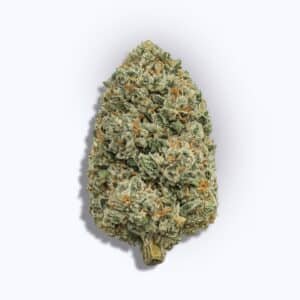
Indoor buds are generally better looking than buds grown by other cultivation techniques. Indoor buds tend to be denser, more colorful, more resinous, better trimmed, and more uniform. This is the reason why indoor flower generally sell at higher retail prices.
Light dep flower, on the other hand, can still look impressive, but it may display slightly looser structures depending on the strain and growing conditions.
Potency:
Potency depends on genetics, cultivation practices, harvesting methods, and post-harvest handling. A well-grown light dep THCa flower can easily outperform a poorly grown indoor flower.
That said, elite indoor facilities often achieve extremely high cannabinoid percentages because they can fine-tune environmental conditions throughout the growing cycle.
Terpene Profiles:
Terpenes are responsible for the aromas and flavors found in cannabis. Many cultivators believe natural sunlight helps encourage richer terpene development. As a result, some light dep strains produce particularly vibrant flavor profiles.
Indoor flower can also achieve exceptional terpene content, especially when grown by experienced cultivators. The difference often comes down to the specific strain and the grower’s expertise instead of the cultivation method alone.
Consistency:
Indoor cultivation generally provides more predictable results. Since growers can control every environmental variable, each harvest tends to look and perform similarly. Whereas light dep cultivation introduces more environmental variability. Seasonal temperature changes, humidity fluctuations, and regional weather patterns can influence the final product.
For consumers seeking consistency with every purchase, indoor flower often has an advantage.
Sustainability:
Today, Energy consumption is one of the biggest concerns within the cannabis industry.
When we talk about indoor cultivation, it requires lighting systems, HVAC equipment, dehumidifiers, fans, and different climate control machines. These systems consume substantial amounts of electricity. Whereas light dep cultivation relies heavily on natural sunlight, making it considerably more energy-efficient.
Therefore, if you are an environmentally conscious consumer, you can choose light dep weed.
Price:
Price is where a light dep flower shines. Because greenhouse operations use less electricity and fewer resources, production costs are significantly lower. Those savings often translate into more affordable retail pricing. On the other hand, indoor flower typically costs more due to higher operating expenses.
Consumers paying premium prices are often paying for consistency, appearance, and cultivation precision.
How THCa Is Affected By Growing Method
The cultivation method plays an important role in how THCa flower develops, influencing everything from cannabinoid levels to aroma and bud structure.
Indoor-grown THCa benefits from tightly controlled conditions, allowing growers to optimize:
- Lighting
- Temperature
- Humidity
- Nutrients
This often results in dense, resin-rich buds with consistent potency and appearance.
Light dep THCa, on the other hand, is grown in a greenhouse using natural sunlight while controlling flowering schedules through light deprivation techniques. Exposure to full-spectrum sunlight can encourage strong terpene development, giving some strains a richer aroma and flavor profile. However, because greenhouse environments are more affected by seasonal conditions, slight variations between harvests can occur.
However, it is important to note that the cultivation method alone does not determine quality. Genetics, cultivation expertise, harvesting practices, and curing methods all contribute to the final product. The growing method simply shapes how the plant expresses its natural characteristics.
For example: a well-grown light dep flower can outperform a poorly cultivated indoor flower, just as premium indoor THCa can deliver exceptional potency and consistency.
Legal Compliance of THCa flower
The growing method does not determine legality. Compliance comes from cannabinoid testing and adherence to applicable regulations.
The legality of THCa flower depends largely on federal and state hemp regulations rather than the cultivation method itself.
Whether a product is light dep or indoor, it must comply with applicable hemp laws.
Most federally compliant hemp products are required to contain no more than 0.3% Delta-9 THC on a dry-weight basis. However, regulations surrounding THCa continue to evolve, and some states have implemented stricter rules regarding hemp-derived cannabinoids.
While regulations are changing, and Congress has introduced new rules, such as the Total THC count, and 0.4 milligrams per bottle. These rules, scheduled to be implemented in November 2026, will define the future of THCa flower in the coming years.
How to Find the right THCa Flower?
Choosing quality THCa flower involves much more than deciding between light dep and indoor. Here are some important considerations that you must keep in mind while buying THCa flower:
3rd-Party Lab Testing: Lab tests from independent labs verify the potency, purity, and safety of the product. Lab reports, also known as Certificates of Analysis (COAs), can confirm THCa content, Delta 9 THC levels, terpene profiles, and more.
Examine Terpene Content: A flower’s terpene profile can influence the experience more than cannabinoid percentages alone. Therefore, always look for strains with terpene profiles that match your preferences.
Freshness: Fresh flower generally provides:
- Better flavor
- Better aroma
- Better smoking quality
Therefore, always pay attention to harvest dates before buying a THCa flower product.
Always Choose Reputable Brands: Reliable brands are transparent about:
- Growing methods
- Testing practices
- Sourcing standards
Match Flower to Your Budget: Sometimes the best purchase is not the most expensive option. Premium indoor flower may offer exceptional bag appeal, but quality light dep flower often delivers outstanding value. Whichever cultivation method you prefer, you can browse our full selection of THCA flower to compare strains and pricing side by side.
Which is right for you?
There is no universal winner in the deps vs indoor weed debate. Both cultivation methods can produce exceptional THCa flower when executed properly.
And, if we talk about which one is right for you, Light dep vs Indoor weed, the answer depends on what matters most to you.
You can Choose Indoor THCa if:
- You want premium bag appeal
- Consistency is important
- You enjoy dense, frosty buds
- You’re willing to pay more
- You prioritize aesthetics and craftsmanship
You can Choose Light Dep THCa if:
- You want better value
- Sustainability matters to you
- You enjoy sun-grown characteristics
- You prefer larger selections at lower prices
- You want a balance between quality and affordability
Conclusion
When comparing light dep vs indoor weed, the better option ultimately depends on your priorities.
For consumers focused on value, sustainability, and robust terpene expression, light dep cannabis can be an excellent choice. Those seeking top-tier bag appeal and maximum consistency may prefer indoor flower.
In the end, instead of focusing on the cultivation method, pay attention to genetics, lab testing, freshness, and grower reputation. These factors often have a greater impact on quality than whether the flower was grown indoors or in a greenhouse.
Frequently Asked Questions (FAQs:)
Is indoor THCa more powerful than light dep?
Not necessarily. Potency depends on genetics, cultivation practices, and post-harvest handling. While indoor facilities often achieve high cannabinoid levels, quality light dep flower can be equally potent.
What is the difference between light dep and greenhouse weed?
Light dep cannabis is a type of greenhouse-grown cannabis. The difference is that light deprivation greenhouses use blackout systems to control flowering schedules, while standard greenhouse operations may rely solely on natural seasonal light cycles.
Does THCa flower get you high?
In its raw form, THCa is non-intoxicating. However, when heated through smoking, vaping, or cooking, THCa converts into THC through a process known as decarboxylation, producing psychoactive effects.
Which is better – indoor or greenhouse weed?
Neither is universally better. Indoor flower typically offers greater consistency and visual appeal, while greenhouse-grown and light dep flower often provide better value and sustainability. The best choice depends on individual preferences and priorities.
Does indoor or light dep weed taste better?
Taste largely depends on the strain, terpene profile, and cultivation practices rather than whether the flower is indoor or light dep. Indoor THCa flower often delivers cleaner, more consistent flavors due to precise environmental control. Light dep flower, however, benefits from natural sunlight, which many consumers believe helps develop richer and more complex terpene profiles. Both can offer exceptional taste when grown properly.