
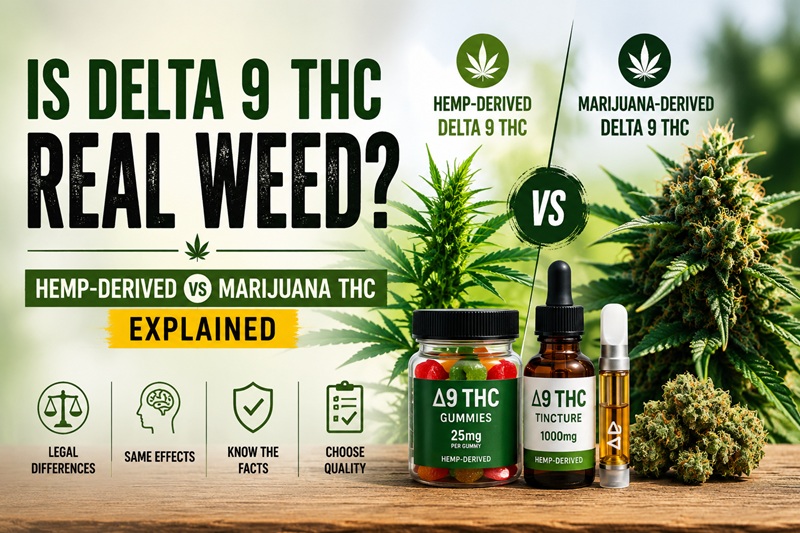
Today, you can buy many Delta 9 products, like gummies, capsules, oils, tinctures, and more, without a medical license. This makes many consumers think – Is Delta 9 THC real weed?
The answer is the difference between hemp-derived and marijuana-derived Delta 9 THC. While marijuana-derived Delta 9 THC products are heavily regulated, hemp-derived Delta 9 THC products are federally legal and are readily available for purchase.
Despite the legal differences, the Delta 9 THC molecule found in hemp and marijuana is the same, which is why both can produce similar effects, making it feel like real weed. Let’s understand the two in detail below.
Recommended Products
-
Sale!
Delta-8 Pomegranate Gummies 30mg
or subscribe to save up to 30%
$69.95$59.95 View Product This product has multiple variants. The options may be chosen on the product page -
Sale!
Delta-9 Pomegranate Gummies 20mg
or subscribe to save up to 30%
$69.95$59.95 View Product This product has multiple variants. The options may be chosen on the product page -
Sale!
CBD Pomegranate Gummies 30mg
or subscribe to save up to 30%
$69.95$59.95 View Product This product has multiple variants. The options may be chosen on the product page
Why Delta 9 THC Feels like “Real Weed”
People looking for real weed are generally the ones who are looking for the classic cannabis experience associated with marijuana. The experience largely comes from Delta 9 tetrahydrocannabinol, better known as Delta 9 THC.
For years, Delta 9 THC has been recognized as the primary cannabinoid responsible for cannabis intoxication. It interacts with the body’s endocannabinoid system, particularly CB1 receptors located throughout the brain and central nervous system. When Delta 9 THC binds to these receptors, users may experience:
- Euphoria
- Relaxation
- Altered perception of time
- Enhanced sensory experiences
- Increased appetite
- Mood elevation
These effects are the same whether the Delta 9 THC originated from hemp or marijuana.
This is where much of the confusion begins.
If two products contain the same amount of Delta 9 THC, they can produce very similar effects.
The biggest differences typically involve legal classification, product formulation, and cannabinoid ratios rather than the Delta 9 THC itself.
Is Delta 9 THC Real Weed?
Delta 9 THC is not weed itself, but it is the primary cannabinoid responsible for the effects most people associate with marijuana. Hemp-derived and marijuana-derived Delta 9 THC are chemically identical and can produce similar effects.
Hemp-Derived Delta 9 THC vs Marijuana-Derived Delta 9 THC
Delta 9 THC is the same cannabinoid regardless of where it comes from. Although the cannabinoid is the same, the source plant creates important legal distinctions. Here is the general breakdown of the differences:
| Features | Hemp-Derived Delta 9 THC | Marijuana-Derived Delta 9 THC |
| Source Plant | Hemp | Marijuana |
| Delta 9 Molecule | Identical | Identical |
| Psychoactive Effects | Yes | Yes |
| Federal Status | Federally legal under certain conditions | Federally illegal |
| Availability | Online and retail stores in some states | Licensed dispensaries |
| THC Limits | Must comply with hemp regulations | No federal hemp limit |
| Testing Requirements | Hemp compliance testing | State cannabis regulations |
| Consumer Access | Generally broader | Restricted to legal cannabis markets |
Is Delta 9 THC Legal?
The legality of Delta 9 THC is one of the most misunderstood topics in the cannabis industry.
Many consumers assume all Delta 9 products are illegal because marijuana remains federally prohibited. Others believe all hemp-derived THC products are automatically legal.
Several legal developments have shaped today’s market. If you want the full picture, we cover Delta 9’s legal status in detail state by state.
The 2018 Farm Bill
The biggest change came with the Agricultural Improvement Act of 2018, commonly known as the 2018 Farm Bill. This legislation removed hemp from the federal list of controlled substances.
Under this federal law, hemp is defined as cannabis containing no more than 0.3% Delta 9 THC on a dry-weight basis.
For example, a large gummy can legally contain several milligrams of Delta 9 THC while remaining below the 0.3% dry-weight threshold.
This legal distinction helped launch the modern hemp-derived Delta 9 market.
The THCA Loophole:
THCA, or tetrahydrocannabinolic acid, is the non-intoxicating precursor to Delta 9 THC. Raw cannabis plants naturally produce THCA rather than Delta 9 THC. When heat is applied through smoking, vaping, or cooking, THCA converts into Delta 9 THC through a process known as decarboxylation.
This created what many people refer to as the THCA loophole.
Some hemp flower products test below the federal Delta 9 THC limit before heating, but contain large amounts of THCA. Once consumed, the THCA converts into Delta 9 THC, producing effects similar to traditional cannabis flower.
This loophole has become a major topic in ongoing regulatory discussions.
2026 Amendments and Regulatory Changes:
Over the years, cannabis regulations have been continuously changing at both federal and state levels.
Throughout 2025 and 2026, lawmakers have proposed and debated various amendments aimed at tightening hemp regulations, particularly concerning intoxicating cannabinoids and total THC calculations.
Many regulators have expressed concerns that current hemp definitions focus too heavily on Delta 9 THC while overlooking the intoxicating potential of THCA.
As a result, several proposals have sought to:
- Include total THC calculations
- 0.4 milligrams Delta 9 THC per container
- Address intoxicating hemp products
- Increase testing requirements
- Clarify cannabinoid definitions
- Restrict certain hemp-derived products
State Laws:
Federal law is only part of the picture, and you need to understand state laws as well. Individual states have the authority to establish their own cannabis and hemp regulations.
As a result, Delta 9 THC laws vary significantly across the country. Some states allow:
- Recreational marijuana
- Medical marijuana
- Hemp-derived Delta 9 THC products
Others restrict:
- Hemp-derived intoxicating products
- High-THC hemp products
- Certain cannabinoid categories
A product that is legal in one state may not be legal in another. Therefore, before buying Delta 9 THC products, consumers should review their state’s current laws and regulations.
How Much Delta 9 THC is Too Much?
There is no definite amount, as the effects depend on several factors like body tolerance, metabolism, consumption method, serving size, and what you have eaten before, which varies from person to person.
For beginners, even small amounts can produce noticeable effects.
Here is the tabular understanding of the general guidelines:
| Serving size | Suitable for | Effects |
| 2.5 mg to 5 mg | Beginners | Mild relaxation and mood enhancement |
| 5 mg to 10 mg | Users with moderate experience | Noticeable effects, including stronger euphoria |
| 10 mg to 20 mg | Experienced users | Noticeable effects |
| 20 mg and above | Experienced users | Strong effects |
It is important to note that consuming excessive amounts may lead to unwanted effects, such as anxiety, dizziness, dry mouth, and temporary discomfort.
Therefore, always start with a low serving size and gradually increase if needed.
How to Choose Real Delta 9 THC Products?
Choosing the real delta 9 THC products can significantly impact the effects that you experience. Therefore, it is important to choose the real products. If vaping is more your style, our 2g disposable vapes are also lab-tested for authentic, verified potency. Here are a few things that you must keep in mind when choosing the right Delta 9 THC products:
Look for Third-Party Lab Testing: Make sure that the product you are buying is third-party lab tested. These lab reports, also known as Certificates of Analysis (COAs), verify
- Delta 9 THC content
- Cannabinoid profiles
- Heavy metal screening
- Pesticide testing
- Microbial safety
Verify Hemp Compliance: Buy products that clearly indicate compliance with applicable hemp regulations. Check THC content and cannabinoid information carefully.
Extraction Method: Products made with live resin or live rosin preserve more of the plant’s terpene profile, which can subtly shape how effects feel. If a brand doesn’t disclose how Delta 9 is extracted, it could be a sign to shop around some more.
Review Ingredient List: Quality products use transparent ingredient labeling. Therefore, always check the ingredient list mentioned on the product label. Avoid products that hide ingredients or provide limited information.
Research the Brand: Reputable brands clearly mention lab reports, manufacturing details, customer support, and clear compliance information. This transparency is a sign of product quality.
Consider the Product Type: Delta 9 THC is available in different forms, like gummies, tinctures, capsules, flower, and oils. Choose the right format that depends on your personal preference and desired effects. Before you buy, it helps to understand Delta 9’s effects and risk profile so your expectations match what you’ll actually experience.
Conclusion
So, is Delta 9 THC real weed?
In terms of the cannabinoid itself, yes.
Delta 9 THC is not weed itself, but it is the primary cannabinoid responsible for the effects most people associate with weed. Because hemp-derived and marijuana-derived Delta 9 THC are chemically identical, they can produce very similar experiences. If you’re ready to try it for yourself, our hemp-derived Delta 9 gummies are a convenient, federally compliant way to get started.
Frequently Asked Questions (FAQs)
Is Delta 9 THC the same as marijuana?
No. Marijuana is the cannabis plant itself, while Delta 9 THC is one of the cannabinoids found within the plant. However, Delta 9 THC is the primary compound responsible for marijuana’s intoxicating effects.
Will delta 9 THC get you high?
Yes. Delta 9 THC is the main psychoactive cannabinoid in cannabis and can produce feelings of euphoria, relaxation, altered perception, and other intoxicating effects.
How long does Delta 9 THC stay in your system?
The answer depends on factors such as dosage, metabolism, body composition, and frequency of use. THC metabolites can remain detectable for several days or even weeks after use, particularly among frequent consumers. Detection times also vary based on the type of drug test being used.
Does hemp-derived Delta 9 feel the same as marijuana?
Hemp-derived and marijuana-derived Delta 9 THC contain the same cannabinoid. When consumed in similar amounts, many users report very similar effects. Differences often come from dosage, product formulation, and the presence of other cannabinoids and terpenes.